
One man amidst a sea of others. Yes, he queues for his ticket, a twenty-peso fare—Kamuning to Taft Avenue. He, but one sardine in a can, counting stations to and fro. A bridge over the dead river Pasig; crepuscular caverns that smell of carcasses, left over from the Martial Law that leads into Ayala Station. Quick stop. The circumnavigator’s legacy—voila! Destination reached, he hastens out of the car, wheezing, panting, heart pounding, scrambling for the Beep card in the pouch in his left trousers’ pocket. First time alone in this pandemonium, this Tartarus of concrete.
Once more, enter another coach. EDSA Rotunda to Vito Cruz. Like cattle led to the slaughterhouse, squeezing through doors that shut and buzz behind. No turning back. Here and there a space to breathe. Clean air commoditized and sold, sold, sold like the finest silks and satins—for the first time in all history. Nowhere, nowhere to breathe, nowhere to fall. What would old Siddhartha say now that he too has left his ivory cage? You’ve a long way to Nirvana, kid.
Observe, observe as you please. There is history to be found here, too. Coaches all donated, leftovers for a beggarly nation—us. Long neglected, these cars repaired, repurposed, cannibalized, for a century and a half of decadence, of decay. Where are the tramways of Old Binondo? Such beauties we abandoned, emerging from the rubbles of aerial bombardment. The year was 1945, and everything is different now. We lost. That revolution, to rewrite a constitution. In EDSA captured and encapsulated in the crumbling stone walls, in idyllic murals showing naught but smiles forged, masquerading a people in despair—and of course, in the vile yet hallow air. One regime after another, each of them six years to rule. Kleptocracy, plutocracy, and a plundersome American banana corporation. Not a step closer to any light beyond the tunnel.
LRT-1, MRT-3. This is our present, yet another country’s past.
The man who calls himself “the man.”
Who is he, really? Student, vagabond, artist, writer, or a pseudointellectual?
He’s nobody. Yet entitled to his own revolt. We all are.
Below each station, different faces but the same hollow eyes. Old men, small children but not a woman in sight. They lie in cardboard sheets spread like blankets upon asphalt and stone and concrete, sizzling like pork beneath the ubiquitous tropical sun. And what if it rains? I’ll tell you what—no tub, no shower; they soak themselves wet. The disease that follows, they welcome with arms wide open. The women, no doubt, are busy. Matriarchs that make ends meet.
They too, are nothing—nobodies! Or so the oligarchs act as though. Not even footnotes in the national narrative. Anecdotes in an electoral speech. A rising tiger, or a sick old man? I’m afraid you may only choose one. Here’s a hint, here’s a hint: one pill is red, the other blue.
Truth is always harder to swallow. You have no voice in this country if your ma or your pa never had one to begin with. Our legislators, they are fond of the very same names, whether it’s Marcos, Zubiri, Enrile, Gatchalian, Aquino—Pacquiao even. Every now and then they’d let the voters break this rule, but it was all in the plan. Dela Rosa, Padilla, Lapid, Tulfo. Don’t be naïve—it was always in the cards to begin with. Just be glad, just be glad. Not too fascist, and definitely not very communist. Uncle Sam can have his massage. Guilt-free, royalty-free, whatever.
Or so it seems on the way to the train station.
Enter and you are greeted. Rifle-bearing devils dressed in blue.
That’s not so bad, is it? Wait for the megaphone.
They scream through the megaphone. Your dignity, caput in an instance.
Cowboys herding cattle, herding sheep: shepherd dogs and all to the rescue.
The only way out—lies at the end of the line. One ride, one queue is all it takes, for him to laugh and call it a day. Half a millennia we were conquered, we were plundered, we were slaughtered, and we were scattered. Half a century ago, eight new regimes (nine, nine, nine with the autocrat), same tactics from the same old playbook. Corporate-backed militias, forcing natives out of their lands. The mafia-police Don Rody hath unleashed. Astonishing, isn’t it?
Legacies set in stone, from the first conquistadors in Mactan—to the one now languishing in Malacañang. He saw that and more in a couple trains to and fro. For there is nothing for him here, at least not if it is peace he longs for. Any semblance of hope, any spark of light—the temporal rains have all but washed away. He is in a hurry.
But hold on! Wait!
Who is “he” even? I’ve asked that before.
Perhaps I deserve an answer?
No one really knows, that’s the truth of it. Not even he himself.
But consider his nom de guerre: José Luis de Godó.
What is in a name? José as in “Rizal,” for he esteems the pen more than he could ever the sword or even a loaded gun. Luis because he is willful, and Godó as in Beckett’s own “Godot”—an inconsiderate man shrouded in promises, one whom you all will wait for at the station but never actually meet. But enough of this war talk. He will fight when he needs to.
Hitherto, he’s civilian, so just call him Marc. It’s a Catalan name. Live with it.
One might be martyred for another. But there is not a country worth dying for.
Sometimes, when the train descends beneath the ground, suddenly enveloped by an absolute darkness, I think of how my forefathers must’ve used their metros as shelters—whether they lived in Guernica, Oslo, or Pre-War Manila. Then I begin to count how many bodies we could squeeze into every car, every bench, every tunnel, and every—hold on, we’d still die.
Perhaps I am simply overanalyzing.
Forgive me, please. This is my first time alone and commuting, after all.

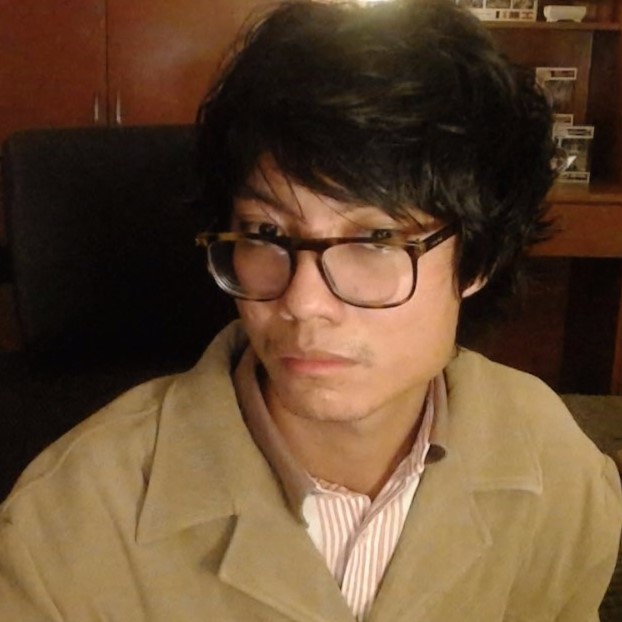


 Marc Paulinus
Leave a comment